When ‘Brazilian slate’ fails: lessons from a Whitby re-roofing project
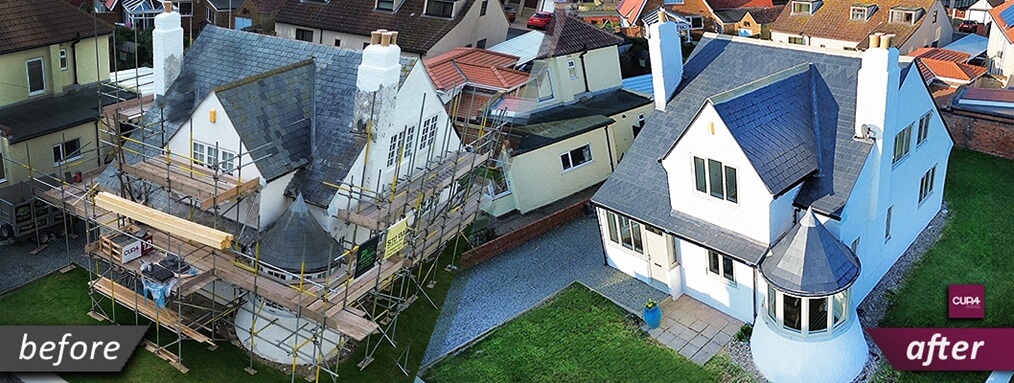
At White Lodge in Whitby, a roof covered with material commonly marketed in the UK as “Brazilian slate” and installed around 2010 failed under coastal conditions. Despite its relatively recent installation, it lost a large number of slates during a storm.
Positioned on Whitby’s West Cliff, the property is highly exposed to strong winds, driving rain and salt-laden air. Such conditions place significant demands on the durability and integrity of any roofing material.
According to Sam Lawson, director of Prodigy Roofing, the existing roof was not suited to this exposed environment. With over 25 years of experience, he assessed the roof and concluded that:
The ‘Brazilian slates’ were not sufficiently durable and were prone to shattering.
So-called “Brazilian slate” in the UK and Irish market does not correspond to true metamorphic slate from a geological perspective. According to the Technical Report on Brazilian Metalutite and NFRC Guidance Note GN66, much of the material marketed under this name is classified as metalutite, a different type of rock.
NFRC Guidance Note GN66 states that Brazilian metalutite does not possess the same construction and technical characteristics as traditional European slates and identifies characteristics such as higher water absorption, increased brittleness and susceptibility to fracture and delamination, which can potentially reduce roof longevity.
This project illustrates some of the performance issues that have been associated with Brazilian metalutite in highly exposed environments. Located on Whitby’s exposed coastline, the roof was subjected to strong winds, driving rain and salt-laden air, conditions that place significant demands on roofing materials.
In such environments, the geological and technical characteristics of the material can play an important role in long-term performance, as highlighted in NFRC Guidance Note GN66 and the Technical Report on Brazilian Metalutite.
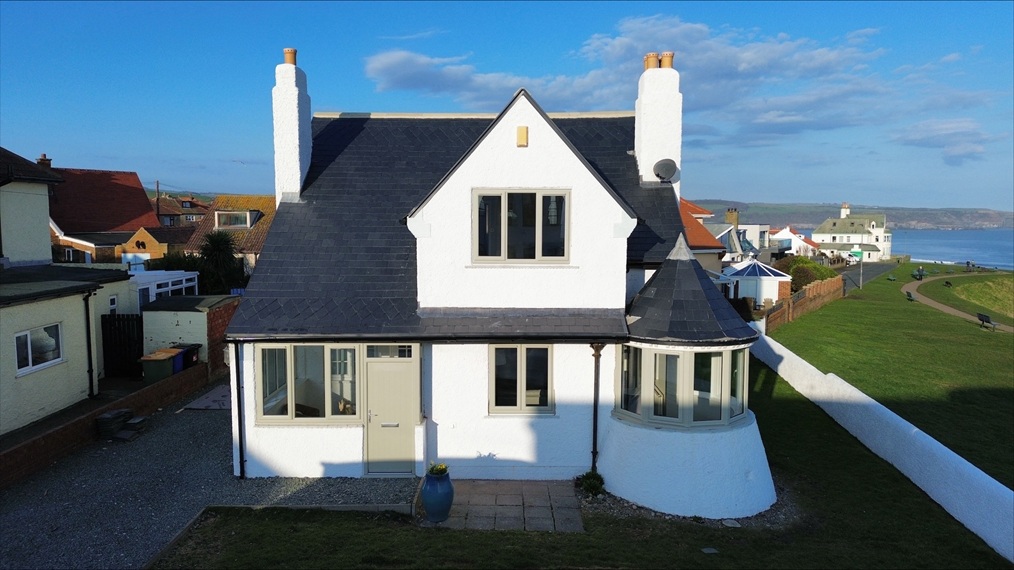
Following the failure, Prodigy Roofing was appointed to carry out a full replacement. The existing roof was stripped and rebuilt with a new membrane, 50×25 mm battens, and a new slate covering.
For the replacement, Sam Lawson selected our CUPA R12 based on his experience with the product across multiple projects. As he explains:
I consistently use the CUPA R12 range due to its proven quality and performance.
The new slate roof has transformed the appearance of the property and provides a roofing solution designed for the demands of its exposed coastal location. The homeowners were highly satisfied with the result, benefiting from a 100-year guarantee on the slates and a 25-year workmanship guarantee from Prodigy Roofing.
This project highlights the importance of material selection in exposed roofing environments. In the demanding weather conditions of the British Isles, the geological and technical characteristics of a roofing material can have a significant influence on long-term performance.
 To learn more about the differences between natural slate and the material commonly marketed as “Brazilian slate”, and how material selection can influence long-term roof performance in exposed environments, contact our team for expert guidance.